How Advanced Manufacturing Boosts Industrial Efficiency
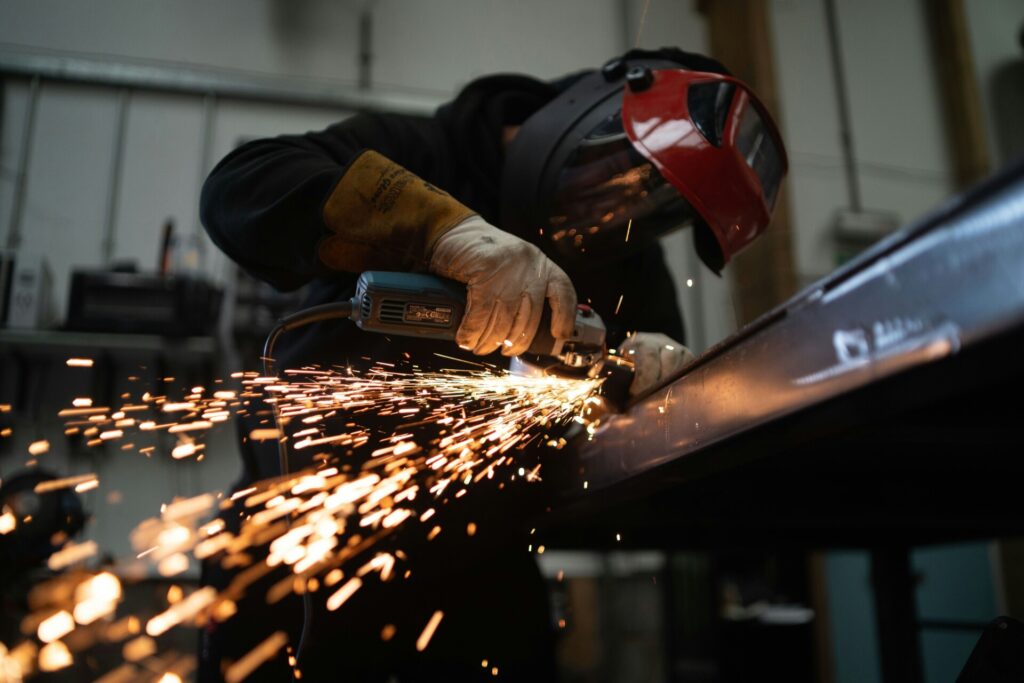
Advanced manufacturing gives industrial businesses a practical way to produce more consistent parts, detect faults earlier and extend the working life of valuable equipment. Technologies such as automated inspection, digital monitoring and precision coating are helping factories improve output without accepting lower quality. For manufacturers facing high energy costs and demanding delivery schedules, these gains can strengthen margins while making production more reliable.
The Drive for Operational Excellence
Operational excellence starts with understanding how materials, people and equipment move through a facility. Improving manufacturing optimisation means examining the whole production process, from raw material handling to final inspection, so managers can identify delays, bottlenecks and waste.
Digital dashboards can reveal recurring stoppages, unusually long changeovers or machines that consume more energy than expected. Teams can then focus on measurable improvements. For example, reducing a 40-minute changeover by ten minutes may create several extra production hours each week.
Clear targets also matter. Achieving operational excellence in manufacturing depends on consistent processes, useful performance data and regular review. Track a small group of indicators, such as defect rates, cycle times and unplanned stoppages, then review them regularly with the people running the equipment.
Reducing Downtime with Precision
Unexpected downtime can disrupt an entire production schedule. A worn shaft, damaged housing or degraded surface may stop connected processes while replacement parts are ordered, shipped and installed. If the component is obsolete or specially made, that delay can last weeks.
Precision repair methods offer another route. Businesses considering innovative metal repair & coating solutions can assess cold spray technology for non-destructive metal build-up, surface restoration and protective coatings. The process can support aerospace, automotive and oil and gas applications where component dimensions and material properties require careful control.
Before approving a repair, record the component’s operating conditions, failure history and dimensional tolerances. That information helps specialists select suitable materials, prepare the surface correctly and define inspection criteria. A planned assessment can turn a disruptive breakdown into a controlled maintenance task.
The Future of Component Repair
Advanced repair is moving towards earlier detection and more targeted intervention. Sensors can monitor temperature, vibration and pressure, while inspection systems can identify small changes before a component reaches the point of failure. Maintenance teams can then schedule work during a planned shutdown.
Digital records add valuable context. A component history covering previous repairs, inspection results and operating hours helps engineers judge when restoration remains practical. Three-dimensional scanning can also compare a worn part with its original geometry, showing exactly where material needs to be rebuilt.
Businesses should establish clear acceptance standards before work begins. These may include dimensional checks, coating thickness measurements and surface testing. Consistent documentation makes repaired components easier to manage and gives quality teams evidence that the agreed specification has been met.
Impact on Key Industrial Sectors
The benefits vary according to the operating environment. Aerospace businesses need close dimensional control and detailed traceability, while automotive manufacturers often prioritise repeatability and short cycle times. In oil and gas operations, components may face abrasion, corrosion and demanding temperature changes.
The same principles also apply across wider manufacturing. A food processing plant may use predictive monitoring to schedule maintenance between production runs. A packaging facility could install automated inspection to detect alignment problems before hundreds of defective units leave the line. Meanwhile, heavy engineering businesses can assess repair options for large components that are expensive to replace or difficult to transport.
Managers should begin with a high-cost bottleneck where failure data already exists. A focused trial makes it easier to compare repair time, service life and total cost against the current maintenance method.
Investing in Sustainable Practices
Industrial efficiency and sustainability often support the same commercial goals. Extending component life reduces demand for new raw materials, machining time and long-distance transport. Accurate production controls also limit scrap, while energy monitoring exposes equipment that draws excessive power during idle periods.
Investment decisions should account for the full life of a component. Purchase price alone leaves out downtime, disposal, replacement lead times and the energy used during production. A repair that returns a suitable part to service may deliver greater value than frequent replacement, provided inspection confirms that it meets the required specification.
Set a baseline before introducing a new process. Record scrap levels, energy use, component life and maintenance hours, then compare the figures after six or twelve months. Those results will show where advanced manufacturing is delivering measurable gains and where the process still needs adjustment.
The most useful technology is the one that solves a documented production problem. Start with a component or process that repeatedly causes delays, define the required result and measure its performance over a complete maintenance cycle.
Image credit: Unsplash





