From C-Suite to Boardroom: Athalie Williams on the Culture Capability Gap
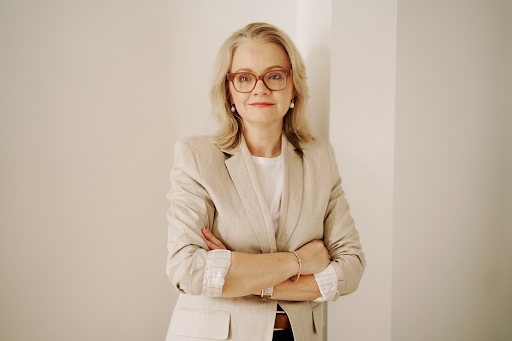
After more than a decade as Chief People Officer at BHP and BT Group (British Telecommunications), Athalie Williams has observed board culture oversight from both sides of the table: as the executive delivering it, and as the leader helping boards understand what they’re actually governing.
The gap between these perspectives, she’s found, is often wider than either side realises.
“I get frustrated when I see HR peers presenting change agendas that feel disconnected from the business problems they’re trying to solve,” Williams reflects. She’s equally frank about the view from the other direction: boards that lack what she calls the “culture muscle” to govern what they cannot directly see.
It’s a capability gap with increasingly serious consequences. From the destruction of sacred Juukan Gorge caves at Rio Tinto to misconduct allegations at Nestlé and governance failures at Optus and ANZ, corporate crises increasingly trace back to boards that struggled to surface, interpret, or act on cultural warning signs.
What CHROs See That Boards Often Don’t
Williams’ dual perspective reveals several persistent blind spots. The first is the signal-to-noise problem. Boards receive enormous amounts of information, but culture typically arrives as isolated data points: an engagement survey result here, a diversity metric there, perhaps a workplace complaint summary. What’s missing is the connective tissue that turns data into insight.
“Boards of large, complex organisations cannot see around every corner, nor should directors be expected to,” Williams notes in recent analysis of board culture oversight. “What they can do is build the capability and systems to surface weak signals earlier, interrogate management narratives, and act decisively when red flags emerge.”
A spike in turnover in one division might connect to a safety incident in another and a customer complaint pattern in a third. Individually, each looks manageable. Together, they reveal cultural dysfunction. But boards rarely see them together, and often lack the cultural literacy to recognise the pattern even when they do.
The Measurement Trap
The second blind spot relates to what gets measured. At BHP, Williams led a push for gender balance, increasing female representation from 17.6% to over 30% in five years. The work required understanding systemic barriers, not just tracking percentages.
“We went after the systemic barriers and really treated it as a systems issue,” Williams explains. “We redesigned everything, how we hired, how we developed leaders, how we structured teams, how we thought about the makeup and design of jobs, even down to the tooling that we used.”
Yet boards often receive diversity updates as outcome metrics (representation percentages) without the leading indicators that reveal whether culture is shifting. Are women being promoted at the same rate? Are they leaving faster? These signals tell the real story, but they rarely make it into board packs.
The same pattern applies across culture oversight. Boards see compliance statistics (e.g. percentage of employees who completed harassment training) but not the behavioural signals that reveal whether anything changed..
When Compliance Masks Dysfunction
Perhaps the most dangerous blind spot is the gap between policy compliance and actual behaviour. Boards naturally gravitate towards questions they can answer definitively: Was the policy updated? Was training completed?
“Instead of asking ‘Was policy followed?’, effective boards probe deeper,” Williams argues. “‘What behaviour was rewarded?’ ‘How was dissent handled?’ ‘What happened when someone raised concerns?’”
Her crisis experience, from BHP’s 2015 Samarco tailings dam disaster to global COVID-19 response, reinforced how critical these questions become. Cultural orientation toward “doing the right thing” doesn’t show up in compliance reports. It shows up in how quickly problems escalate, whether bad news travels up, and whether people feel safe to challenge decisions.
The HR Integration Challenge
The gap extends to how boards engage with human capital expertise. Williams has observed many boards still see HR as a reporting function, not a source of strategic insight.
“The days of standalone ‘culture or engagement updates’ are gone,” Williams argues. “In today’s complex environment, boards need integrated insight, the kind that connects culture to performance, risk and strategic execution.”
This means involving human capital expertise earlier: in capital allocation decisions where workforce capability determines execution success, in M&A evaluations where cultural integration drives value creation, in technology investments where adoption depends on workforce readiness.
At BT, where Williams served as Chief HR Officer during the company’s transformation from telecommunications provider to technology business, this integration was essential. The company announced plans to reduce headcount by 45,000-55,000 roles by 2030 whilst fundamentally changing the skill composition of the remaining workforce.
“We weren’t just shrinking, we were fundamentally changing its shape and the underlying makeup of the skills that we would need heading into 2030 and beyond,” Williams explains. Governing a transformation of this scale requires boards to understand human capital implications upfront, not receive periodic updates afterwards.
What Boards Can Actually Control
Williams has identified several levers boards control that have outsized cultural impact.
The first is CEO accountability. “So much of it comes down to senior leadership,” Williams observes. “Are they really believing what they need to deliver? Are they deeply committed to the change?”
During her time at BHP, Williams partnered closely with the CEO and board on succession planning across the executive team, not merely administrative planning, but ensuring cultural continuity and evolution. Boards that treat CEO succession as primarily a strategic capability question often miss the cultural dimension entirely.
The second lever is incentives. “We tied it to managers’ bonus and performance outcomes,” Williams notes of BHP’s gender balance push. Making cultural outcomes explicit in executive evaluation and compensation sends signals throughout the organisation about what actually matters. Yet many boards remain uncomfortable linking pay to cultural metrics, viewing them as too subjective. This discomfort perpetuates the problem.
The third lever is what boards prioritise in their own agenda time. “What boards choose to prioritise sends a powerful cultural signal,” Williams argues. “It tells the organisation not only what matters, but also what kind of behaviour is expected and tolerated from the top.”
She points to the UK’s recent legislation requiring employers to take reasonable steps to prevent workplace sexual harassment. Some boards treat this as a compliance exercise: update the policy, refresh training, file it away. Others use it as an inflection point, reviewing use of NDAs in misconduct cases, strengthening oversight of third-party risks, embedding prevention into leadership development.
“Every compliance decision is also a cultural decision,” Williams observes. “Boards that act proactively and transparently set a tone that cascades through the enterprise.”
Building the Culture Muscle
Effective culture oversight requires deliberate capability-building. Williams highlights five areas:
- Pattern recognition: Connecting weak signals across data sources.
- Cultural literacy: Comfort discussing tone, behaviour, and strategic alignment.
- Sharper questioning: Moving from compliance to behavioural inquiry.
- Risk sensitivity: Seeing culture as a leading indicator of exposure.
- Courage and curiosity: Probing narratives, surfacing challenge, seeking dissent.
These capabilities form what Williams calls the “culture muscle” — built through education, exposure, and practice.
The View From Both Sides
As Williams transitions to a portfolio career spanning board roles, CEO advisory, and leadership coaching, she brings a rare vantage point: deep operational experience paired with strategic insight shaped by years of working closely with boards on culture, leadership, and transformation.
“Culture happens on a board’s watch,” she concludes. “If you wouldn’t leave risk solely to HR, don’t leave culture there either.”
The opportunity, she argues, is for boards and HR to embed human capital at the heart of governance, stewarding culture with the same rigour applied to strategy, risk, and performance.
For boards willing to build that capability, the view from the C-suite offers guidance on what truly matters, and what too many still fail to see.