The Growth of Workplace EV Charging in Wales: Why Business Charging Is Becoming Essential
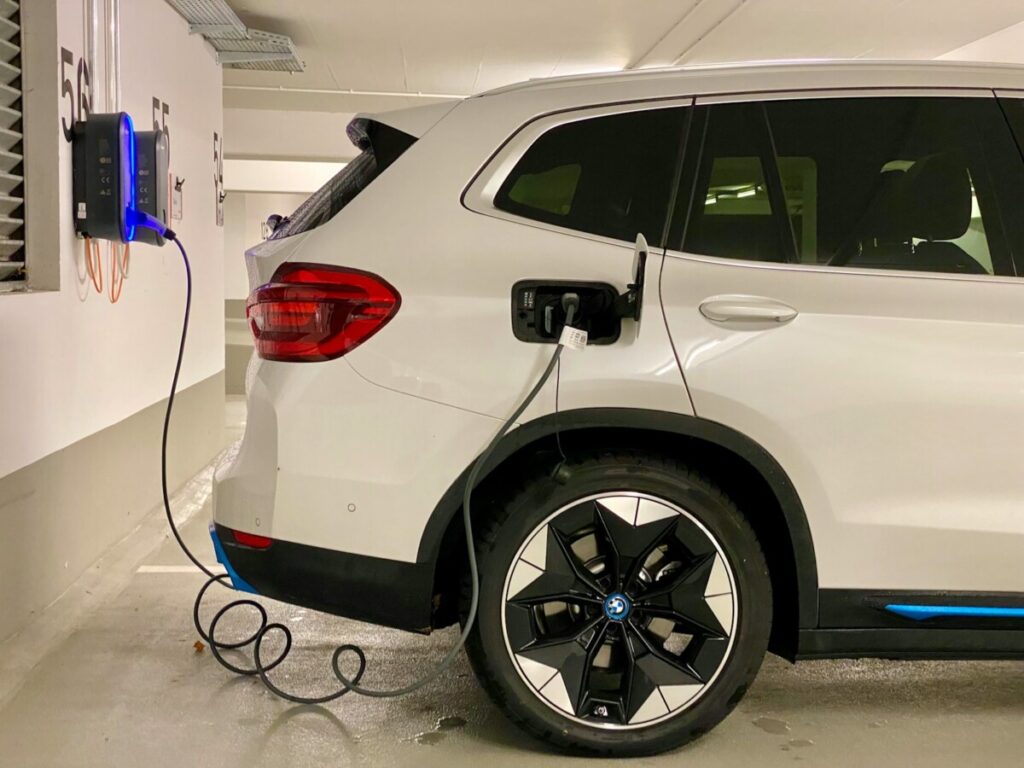
The growth of electric vehicle (EV) charging infrastructure across Wales is accelerating, driven by rising EV adoption, net zero commitments, and changing expectations among employees and businesses alike. While public charging networks have expanded in recent years, many employers are now recognising that workplace EV charging is becoming a practical and strategic investment — not just an environmental statement.
Across Wales, more businesses are installing EV chargers in company car parks, offering employees the ability to charge at work, often at lower cost and with greater reliability than the public network can currently provide.
EV Charging Networks Are Expanding — But Gaps Remain
Wales has seen steady improvements in public EV charging provision, particularly along major routes and in urban centres. Local authorities, private operators and energy companies have all contributed to expanding coverage, helping to ease early concerns around range anxiety.
However, accessibility remains inconsistent. Rural areas, smaller towns and some industrial zones still lack sufficient charging capacity, and peak-time availability can be unpredictable. For many drivers, especially commuters, reliance on public infrastructure alone is not always practical.
This is where employers can play a key role.
Why EV Charging Is a Growing Workplace Benefit
Providing EV charging at work offers multiple advantages for employers, even when electricity costs are passed on to staff.
From an employee perspective, workplace charging is convenient, reliable and often cheaper than rapid public chargers. For those without off-street parking at home, it can be the most viable way to own an EV at all.
For employers, the benefits extend well beyond convenience:
- Supporting net zero and ESG goals
- Enhancing employee benefits packages
- Attracting and retaining talent
- Future-proofing company premises
- Demonstrating environmental leadership
Importantly, offering charging does not require electricity to be subsidised. Many businesses now use smart charging systems that allow users to pay for energy consumed, ensuring costs are recovered while still providing a valued service.
As EV ownership continues to rise in Wales, workplace charging is increasingly seen not as a perk, but as a logical part of modern employment infrastructure.
Bay Technology Centre: A Welsh Example of Energy-Positive Design
A standout example of how sustainability, technology and employee wellbeing can align is the Bay Technology Centre in Port Talbot.
Built by Morgan Sindall Construction, the centre is an energy-positive building, meaning it generates more energy than it uses. Through a combination of solar generation, highly efficient design and intelligent energy management, the building uses surplus energy to power other nearby buildings, such as the council’s Hydrogen plant.
Crucially, the building also provides low-cost EV charging for employees, using locally generated renewable energy. This reduces carbon emissions, lowers running costs and directly benefits the people who work there.
The project demonstrates how modern commercial buildings can support regional sustainability goals while delivering tangible everyday benefits. It is increasingly seen as a model for future developments across Wales — particularly as businesses look to reduce energy costs and carbon footprints simultaneously.
A Growing Trend Across Welsh Employers
From business parks and offices to manufacturing sites and public-sector facilities, EV charging is becoming a common feature of company car parks across Wales.
Many employers are opting for scalable systems that can expand as demand grows, integrating ev charging solutions that support smart load balancing, payment systems and renewable energy integration. These systems allow businesses to manage energy use efficiently while offering a reliable service to staff and visitors.
As grid capacity and renewable generation improve, workplace charging is expected to play an increasingly important role in supporting Wales’ wider transition to electric transport.
Public Infrastructure Still Has Work to Do
While progress has been made, most experts agree that Wales’ public charging network still has significant room for improvement. Faster rollout, better rural coverage and improved reliability will all be needed to support mass EV adoption.
Until then, workplace charging offers a practical bridge — reducing pressure on public chargers while enabling more drivers to switch to electric vehicles with confidence.
Looking Ahead
The growth of business EV charging in Wales reflects a broader shift in how employers think about energy, transport and employee wellbeing. With energy-positive buildings like the Bay Technology Centre showing what is possible, and more businesses investing in workplace charging, EV infrastructure is becoming embedded in everyday working life.
As Wales continues its transition towards a low-carbon economy, employer-led EV charging is likely to remain one of the most effective and visible ways for businesses to contribute — benefiting the environment, the regional economy and the people who power it.
Sources and References
- Morgan Sindall Construction – Bay Technology Centre case study
https://www.morgansindallconstruction.com/our-projects/case-studies/bay-technology-centre/