Fresh hope for one of the world’s rarest plant species as 500 Shore Dock returned to Welsh coast
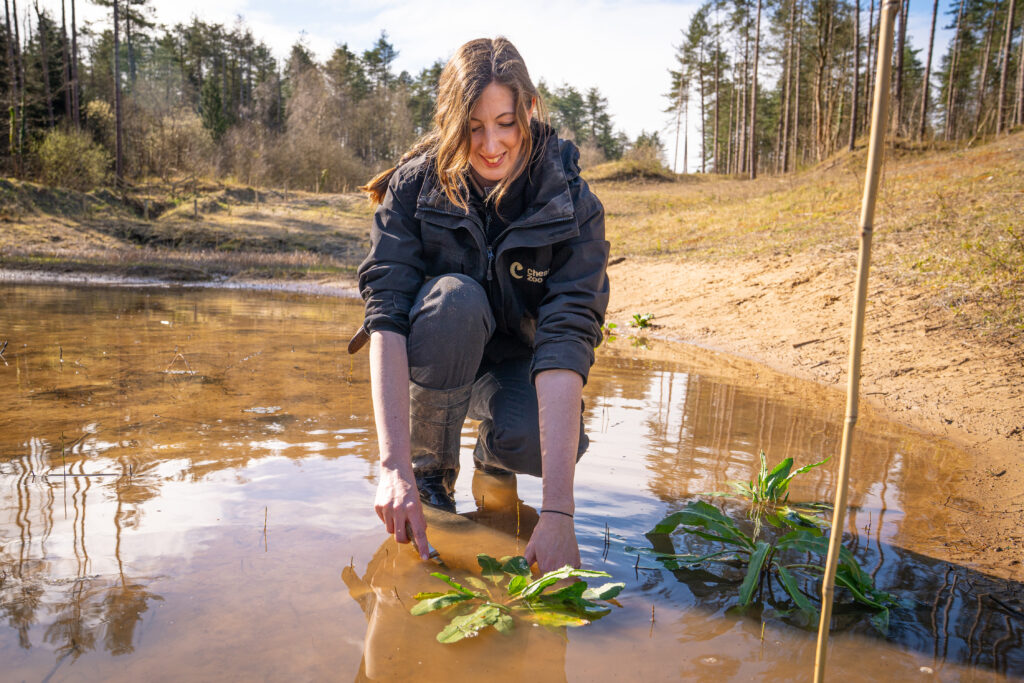
One of the UK’s rarest coastal plants is being brought back from the brink thanks to a major conservation partnership working to restore its fragile habitat in North Wales.
Fewer than 5,000 Shore Dock plants remain in the wild worldwide. Now, conservationists are working to secure its future at Newborough, Anglesey – one of its most important sites – by restoring the conditions it needs to survive and reintroducing hundreds of carefully cultivated plants.
Last week, more than 500 Shore Dock plants were returned to the site in the first in a series of planned re-planting cycles.
Clare Sampson, Natur am Byth Project Manager for RSPB Cymru, said: “North Wales is home to incredible landscapes and rare species that deserve to be protected for future generations. Through Natur am Byth!, we’ve been able to boost Shore Dock at Newborough and take an important step towards a sustainable population. This has been a true partnership effort – and we’re committed to building a lasting legacy for this species”.
Phil Esseen, Head of Plants at Chester Zoo where the plants were nurtured, said Wales presented an important stronghold for the species.
He added: “It has been a privilege to grow these unique plants from seed, ensure they thrive under carefully controlled conditions and help return them to their rightful place. Conservation isn’t just about animals. Protecting plants like shore dock is essential to restoring whole ecosystems. We’re proud to support a project like Natur am Byth!, without which these plants would not be able to establish in the wild.”
Shore Dock grows in a highly specialised coastal environment, relying on a delicate balance of freshwater and sandy, open habitats. Over time, these conditions have been lost or degraded, putting the species at risk.
Work at Newborough has focused on restoring these habitats – through measures such as scrub clearance, grazing and improving freshwater conditions – to give the plant the best chance of survival.
Graham Williams, Senior Officer for the Land Management team at Natural Resources Wales, said: “Shore Dock is our rarest dock species and grows in particularly challenging and marginal habitat that is much impacted by its location. The planting out of docks grown from seed native to Newborough is one of many interventions at our disposal that will enhance the fortunes of this rare species”.
The project forms part of Natur am Byth!, a Wales-wide programme bringing together conservation organisations to save some of the country’s most threatened species.
As well as helping Shore Dock, the work is already supporting a wider network of wildlife, from insects to amphibians, by improving the overall health and resilience of the coastal ecosystem.
Robbie Blackhall-Miles, Vascular Plants Officer for Plantlife, added: “Shore Dock is globally threatened, and Wales holds a significant proportion of its remaining population. It’s important that the population at Newborough is maintained and managed to ensure its continued survival”.
While this latest phase marks real progress, conservationists say ongoing management will be crucial to ensure the species can establish and thrive in the long-term.
For now, the return of Shore Dock to its coastal home offers a powerful sign of what can be achieved through partnership working – and a renewed sense of hope for one of the world’s most threatened plants.
Clare Sampson, Project Manager for Natur am Byth:
“In North Wales we are blessed with a beautiful landscape and a host of rare species that deserve to be enjoyed by future generations. Through Natur am Byth we have been given the opportunity to make a difference, and it has been a privilege and a joy to boost the numbers of Shore dock at Newborough, with the aim of making a viable population for sustained growth. Collaboration has been key to success, with great support from Newborough NRW staff, Shore dock expertise from Plantlife, and propagation from Chester Zoo. With such enthusiasts, the work will not stop at the end of the project, and we will continue to work together to ensure a legacy for the species.”
Phil Esseen, Head of Plants for Chester Zoo:
“Harvesting, growing and replanting the seeds requires special licenses. Chester Zoo has a license to grow Shore Dock, but the seedlings would never return and establish in the wild without projects like Natur am Byth. We helped 500 plants grow from seed at the zoo’s on-site nursery, and they flourished, growing quite vigorously. They started in a polytunnel and have been kept off-show, partly because there’s not much to see! We used sandy substrate to try to mimic as much as possible the normal conditions they would encounter on the coast. As long as the environment is right, it’s clear they can thrive, and we hope that they continue to do so now that they have been returned to their wild habitat”.
Graham Williams, Senior Officer Land Management Team for NRW:
“Tywyn Niwbwrch & Ynys Llanddwyn National Nature Reserve and forest is one of the finest coastal ecosystems in Wales and the UK. Its complex mosaic of habitats supports a dazzling array of specialist and critically endangered species, some of which are only found here or in a handful of locations elsewhere. Caring for such an important ‘Jewel in the Crown’ requires an often-innovative approach to ensure critical ecological processes are restored and then maintained to protect the integrity of the site and its wildlife. Shore Dock is our rarest dock species and grows in particularly challenging and marginal habitat that is much impacted by its location deep within the forest. The planting out of docks grown from seed native to Niwbwrch is one of many interventions at our disposal that will enhance the fortunes of this rare species. Creating space for Shore Dock through creative habitat management will also enhance conditions for a range of other key species including invertebrates such as medicinal leech, water stick insects, dragonflies and damselflies, restricted amphibians such as Great Crested Newts and a whole array of flower plants and bryophytes. Caring for this keystone species will effectively be the catalyst for enhancing biodiversity across the site.”
Robbie Blackhall-Miles, Vascular Plants Officer for Plantlife:
“Shore Dock is assessed by the International Union for the Conservation of Nature (IUCN) as Vulnerable to extinction which gives it the same international threat status as Giant Pandas and Snow Leopards. The project to supplement the population at Newborough will be impactful for this species on a global scale. With The British Isles being home to most of the world’s population, and Wales home to a significant proportion of that, it is important that the population at Newborough is maintained and managed to ensure its continued survival.
“This project will not only boost the species ability to persist at Newborough but also enable it to reproduce and colonise new sites in the future.
“On a local scale the works to manage the habitats at Newborough are not just good for this species but also for a number of other locally rare species including Rock Roses and Vernal Mining Bees.”