Sustainable Energy Solutions Wales Businesses Are Investing In (and How SMEs Can Benefit)

Sustainable energy solutions are practical upgrades that reduce energy consumption or shift power use toward lower-carbon sources without limiting productivity.
For Welsh businesses, this is no longer a niche concern. Energy costs have become unpredictable, margins are tighter, and customers increasingly pay attention to how businesses operate behind the scenes.
Small and medium-sized enterprises feel this pressure most.
Energy is often one of the largest controllable overheads, whether you run a manufacturing unit in North Wales, a hospitality venue along the coast, or a warehouse serving regional supply chains.
This guide explains which sustainable energy solutions Welsh businesses are actually adopting, how they work, what they cost, and how SMEs can benefit without overcommitting.
It also covers common limitations, available incentives, and a practical path to getting started.
Why Are Businesses in Wales Investing in Sustainable Energy Now?
Welsh businesses are investing in sustainable energy because energy volatility makes planning difficult and efficiency improvements offer fast, measurable relief.
For SMEs, even modest price swings can disrupt cash flow, especially in energy-intensive sectors such as hospitality, logistics, and light manufacturing.
There is also growing pressure from supply chains and public contracts.
Sustainability metrics increasingly influence supplier selection, making energy efficiency a competitive factor rather than a branding exercise.
Finally, the technology has matured.
LED lighting, solar systems, and energy monitoring tools are proven, scalable, and easier to deploy in phases, allowing businesses to improve without major operational disruption.

What Types of Sustainable Energy Solutions Are Welsh Businesses Adopting?
Sustainable energy solutions refer to a group of technologies that reduce energy demand, lower carbon intensity, or improve control over consumption.
In Wales, adoption generally falls into three areas: on-site generation, efficiency upgrades, and energy visibility.
Solar systems reduce reliance on grid electricity during daylight hours.
Efficiency upgrades focus on lighting and equipment that operate continuously.
Monitoring systems provide the data needed to prevent waste from creeping back in over time.
Together, these approaches form a practical, layered strategy rather than a single high-risk investment.
Solar Energy Systems for Commercial Properties
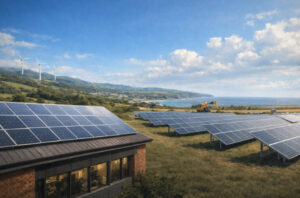
Commercial solar energy systems convert sunlight into electricity using photovoltaic panels connected to inverters and site distribution boards.
For Welsh SMEs, the primary benefit is offsetting daytime electricity purchases with self-generated power.
Rooftop solar is the most common entry point because it uses existing space and can be sized to match operational demand.
Ground-mounted systems can be effective where land is available, though planning and installation are more involved.
Ownership and land use rights matter when solar becomes part of long-term planning.
Surface use agreements are contracts that define how land can be used for energy infrastructure, and understanding what surface use agreements can help businesses avoid complications when installing or expanding on-site energy systems.
LED Lighting Upgrades and Smart Lighting Controls
LED lighting is an energy-efficient lighting technology that produces the same or better illumination while using far less electricity than traditional lamps.
For many Welsh SMEs, lighting upgrades deliver the fastest return because lights often run for long hours in workspaces, storage areas, and customer-facing environments.
Smart lighting controls add automation through sensors and scheduling.
These systems adjust lighting based on occupancy or daylight levels, reducing waste in corridors, loading bays, and intermittently used spaces.
Measured upgrades work best.
Comparing energy use before and after installation ensures savings are real and prevents over-lighting areas that only require task-specific illumination.
Energy-Efficient Manufacturing Equipment
Energy-efficient manufacturing equipment refers to machines and systems designed to reduce power consumption per unit of output.
This is achieved through improved motors, intelligent controls, and smoother operating cycles.
For Welsh manufacturers, upgrading drive systems and controls often produces dual benefits.
Energy use drops, and mechanical stress is reduced, extending equipment life and improving consistency.
Material efficiency also plays a role.
Scrap represents wasted energy already spent on power, labour, and compressed air.
Processes that reduce rework and maintain tight tolerances can indirectly lower overall energy demand.
Energy Monitoring and Smart Energy Management Systems
Energy monitoring systems measure electricity use across equipment, zones, or entire facilities.
They transform energy from a fixed overhead into a visible operational variable.
Smart energy management platforms aggregate this data and highlight inefficiencies such as overnight baseload creep or machines running outside production hours.
Even simple setups can reveal surprisingly large sources of waste.
The value lies in action.
Once usage patterns are clear, businesses can reschedule loads, adjust controls, or justify targeted upgrades with confidence.
What Are the Main Benefits of Sustainable Energy Solutions for SMEs in Wales?
Sustainable energy solutions lower operating costs, improve predictability, and strengthen operational resilience.
They also modernize infrastructure, making sites easier to manage and maintain.
The strongest results come from combining efficiency, generation, and monitoring rather than relying on a single upgrade.
Five key benefits consistently appear for Welsh SMEs:
- Reduce operating costs by cutting long-run energy waste
- Stabilize budgeting by lowering exposure to price volatility
- Strengthen competitiveness in tenders and supplier assessments
- Improve reliability by replacing ageing infrastructure
- Increase long-term site value through modernized systems
What Are the Limitations and Challenges Businesses Should Be Aware Of?
Sustainable energy projects come with predictable challenges, mainly around capital, suitability, and follow-through.
These are manageable when planned early.
The most common pitfall is treating energy upgrades as a one-off project.
Without monitoring and basic discipline, early gains can erode over time.
Four key limitations to consider are:
- Requires upfront investment that may compete with growth spending
- Depend on site constraints such as layout and roof condition
- Create learning curves in controls and maintenance routines
- Delay payback in low-usage or irregular operations
How Much Do Sustainable Energy Solutions Cost for Welsh SMEs?
Costs vary by site size and scope, but most SME projects range from a few thousand pounds to the low six figures.
LED upgrades typically sit at the lower end, while solar installations depend heavily on capacity and electrical integration.
Energy monitoring systems can start modestly and scale as insights grow.
The goal is proportional investment, not overengineering.
Five factors most strongly influence cost:
- System size based on demand and operating hours
- Installation complexity, including access and downtime planning
- Technology choice from basic to fully automated systems
- Site conditions, such as wiring quality and roof readiness
- Incentive availability that can accelerate payback
Are There Grants and Incentives Available for Welsh Businesses?
Yes, grants and incentives are often available, though eligibility and funding windows change.
Support may come from Welsh Government programs, UK-wide schemes, or local initiatives.
The key is to treat incentives as a bonus rather than the foundation of the business case.
Projects should remain viable even if funding timelines shift.
Understanding property and land use rights can also matter during redevelopment.
Questions such as who owns the mineral rights to your property may arise when long-term site planning or asset sales intersect with energy upgrades.
How Can SMEs in Wales Start Transitioning to Sustainable Energy?
Transitioning works best when approached as an operational improvement rather than a branding exercise.
Measurement comes first, followed by targeted action.
Five practical steps guide the process:
- Assess current energy usage and identify major loads
- Match solutions to site constraints and operating hours
- Evaluate realistic costs, savings, and incentives
- Select qualified suppliers and plan installations carefully
- Monitor performance and adjust settings over time
Which Industries in Wales Benefit Most from Sustainable Energy Investments?
Industries with long operating hours or high energy intensity benefit most from sustainable energy upgrades.
In Wales, this often includes manufacturing, logistics, and hospitality.
Five sectors consistently see strong returns:
- Manufacturing through equipment and process efficiency
- Hospitality due to lighting, heating, and hot water demand
- Retail, where consistent lighting and refrigeration matter
- Logistics and warehousing with large, intermittently used spaces
- Professional services benefiting from building control optimization
In fabrication environments, process selection also affects energy outcomes, and waterjet cutting technology can support cleaner cuts and reduced rework in sheet metal cutting operations.
Sustainable Energy Solutions vs Traditional Energy Use – Is the Shift Worth It?
Sustainable energy solutions generally offer better long-term control than traditional energy use.
While upfront costs exist, they reduce exposure to volatility and unlock operational flexibility.
Traditional energy use is simple but reactive.
Sustainable systems add control, visibility, and scalability.
Factors: Sustainable approach, Traditional approach
Cost stability, More predictable, Highly variable
Waste visibility Measured and actionable Largely hidden
Scalability Phased and expandable Fixed consumption
Resilience Multiple control levers Limited response options
Conclusion – How Sustainable Energy Is Shaping the Future of Welsh SMEs
Sustainable energy solutions are no longer experimental upgrades.
They are practical tools that help Welsh SMEs stabilize costs, modernize infrastructure, and operate with greater confidence.
The most successful businesses follow a simple pattern.
They measure first, fix obvious waste, invest carefully, and monitor results over time.
When sustainability is incorporated into daily operations rather than treated as a one-time declaration, it becomes financially meaningful.
For Welsh SMEs, that shift is increasingly becoming a competitive necessity rather than a future aspiration.





