This beautiful lunar phenomenon can tell you if a storm is coming
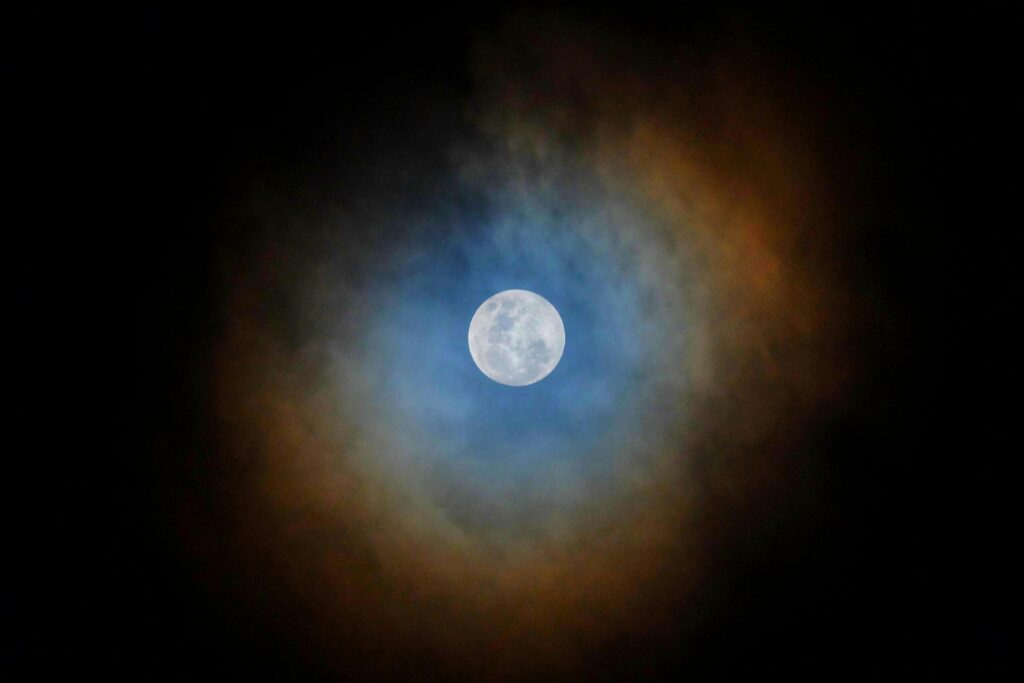
A glowing ring around the moon might look magical, but astronomy experts say it can also be a powerful early warning sign of incoming rain or snow. Known as a lunar halo, this striking night-sky phenomenon often appears hours before a weather system moves in.
According to astronomy expert Alan Jones from 365 Astronomy, lunar halos are not just beautiful to look at. They are closely linked to advancing weather fronts that commonly bring precipitation within the next 12 to 36 hours.
As interest in unusual sky events continues to soar across the UK, experts are encouraging people to look up and learn what these glowing rings around the moon can really mean.
Alan Jones explains: “A lunar halo is a large, pale ring of light that appears around the moon, usually with a soft white glow and faint hints of colour.”
“They form when moonlight passes through millions of tiny ice crystals suspended high in the atmosphere, usually in thin cirrus clouds around 20,000 feet above the ground. The light bends at a precise 22-degree angle, creating that perfect circular ring.”
The appearance of a lunar halo is often connected to the leading edge of a warm weather front. These fronts are rich in ice-crystal clouds, which create the halo effect before the main body of rain or snow arrives.
Alan Jones explains the connection: “In many cases, those high cirrus clouds are the first sign that a large weather system is approaching. That’s why farmers, sailors and weather-watchers have used lunar halos for centuries as a natural storm warning.”
In simple terms, a lunar halo does not cause bad weather, but it frequently signals that precipitation is on the way.
“While a lunar halo is not a guaranteed forecast, it is considered a strong traditional indicator of changing weather conditions, especially in the UK’s fast-moving climate systems.
“A visible halo often means rain or snow could arrive within 12 to 36 hours. Winter halos are more frequently associated with snow or sleet. Summer halos are more likely to precede steady rainfall.”
“Not every halo ends in a storm,” Jones adds, “but far more do than people realise. Seeing one should at least make you check the forecast more carefully.”
Best conditions to spot a lunar halo
Lunar halos are more likely to appear when the following conditions align:
- A bright moon, ideally close to full
- Thin, high cloud cover rather than thick low clouds
- Clear skies beneath those high clouds
- Low light pollution for better contrast
How to photograph a lunar halo with a smartphone
Lunar halos can often be captured clearly with the right technique.
Alan Jones recommends:
- Use Night Mode or a long-exposure setting
- Hold the phone as steady as possible or use a tripod
- Tap to focus on the sky, not nearby buildings
- Take multiple shots at slightly different exposure levels
- Avoid pointing the camera near streetlights, which can wash out the halo
“Lunar halos are one of the most beautiful and scientifically fascinating things you can see in the night sky. Once you understand what causes them, you’ll never look at a glowing moon in the same way again.”





